
What it does, and the one thing it does not check
AI in interior design is not one product. Three different things share the name, and picking between them is not a question of which is best. It is a question of what you have to hand over at the end.
We compare Decato against most of the tools below one at a time, so this page does the other job: what each kind actually returns, which ones now link to furniture you can buy, and the single check that none of them run.
The usual complaint about AI rooms — the furniture is not real — has stopped being true.
Three of the tools on this page return shoppable links today. The gap that remains is a different one, and nobody writes about it: a product matched to a photograph has never been measured against the room.
Checked August 2026
Three things called AI interior design
They take different inputs and return different objects. Most disappointment with these tools comes from buying one kind while needing another.
Restyle a room you already have
You photograph the room you are standing in and the tool repaints it in a chosen style. The walls, windows and daylight in the result come from your photograph, which is why these read as convincing.
- In
- A photo, a sketch or a CAD screenshot
- Out
- Photoreal images, usually in seconds
Furnish an empty room for a listing
Aimed at property photography rather than at design. The room is empty, the job is to make it sell, and nobody is going to buy the sofa in the picture: it is there to show the space in use.
- In
- A photograph of an empty room
- Out
- A furnished image, priced per photo
Plan a room and source what goes in it
Starts from the floor plan rather than from a photograph, so the room is a set of measurements before it is an image. The output is a list of products with prices, and the picture is a by-product of it.
- In
- A floor plan and a brief
- Out
- A priced specification, and a render of it
What AI for interior designers is genuinely good at
Worth saying plainly, because the section after it is a criticism and a criticism is only worth reading from someone who looked properly.
It is genuinely fast
Ten to thirty seconds for a photoreal restyling is not a marketing number, it is what these tools do. Against a rendering pipeline that took an afternoon, that is a real change in how many options a client gets to see.
Several now link to real furniture
The old complaint, that the furniture in the render does not exist, has stopped being true across the board. REimagineHome, HomeDesigns AI and Decory AI all return shoppable links to the pieces they show, and Decory adds a downloadable report with colour codes. (Checked August 2026.)
A sketch is a valid input
Several take a hand drawing, a blueprint or a SketchUp screenshot as readily as a photo. For the early conversation with a client that removes a whole modelling step.
The check none of them run
Every tool above works from an image. That is what makes them fast, and it is also the whole limit: the model is composing a picture, not solving a layout. Nothing in that pipeline knows the wall is 3.2 metres long.
So when the good ones hand you a shoppable link, the product has been matched to what the room looks like. Whether it clears the door swing, leaves a walkway, or fits the wall at all is a question the render was never asked, and the answer arrives at delivery.
This is not a reason to avoid them. It is a reason to know which half of the job you have finished when the image looks right.
The complaint people make, in their words
The argument above is ours. It is worth knowing that people who use these tools arrive at the same place from the other direction, and they are blunter about it. The most-read thread on the subject is titled “Stop using AI for your interior design”, and the objection in it is not that the pictures are ugly. It is that the model resizes furniture to make it fit the frame.
That is the same failure described from the user’s side. A sofa drawn slightly shorter than it is looks right in the render and arrives fifteen centimetres too long. The other recurring question in those threads is quieter and more damning: has anyone actually built what the AI showed them?
We are not quoting further, and none of it is treated as fact here: forum posts are out of context and their authors were not asked. Every figure on this page comes from the vendors. If you want the tools themselves compared rather than the category explained, the roundup does that with prices.
AI interior design software that starts from the plan
Decato works the other way round. The floor plan comes first, so the room is a set of wall lengths and door swings before it is ever an image. Furniture is matched against those numbers, and anything that does not clear is dropped before you see it.
The render still gets made. It is built from the exact products on the list, rather than the list being reverse-engineered from a render.
And the honest limits: it runs on Mac and Windows, not in a browser, and it will not restyle a photograph of your living room, which is the thing most people arriving on this page actually want. If that is you, the tools above are better at it than we are.
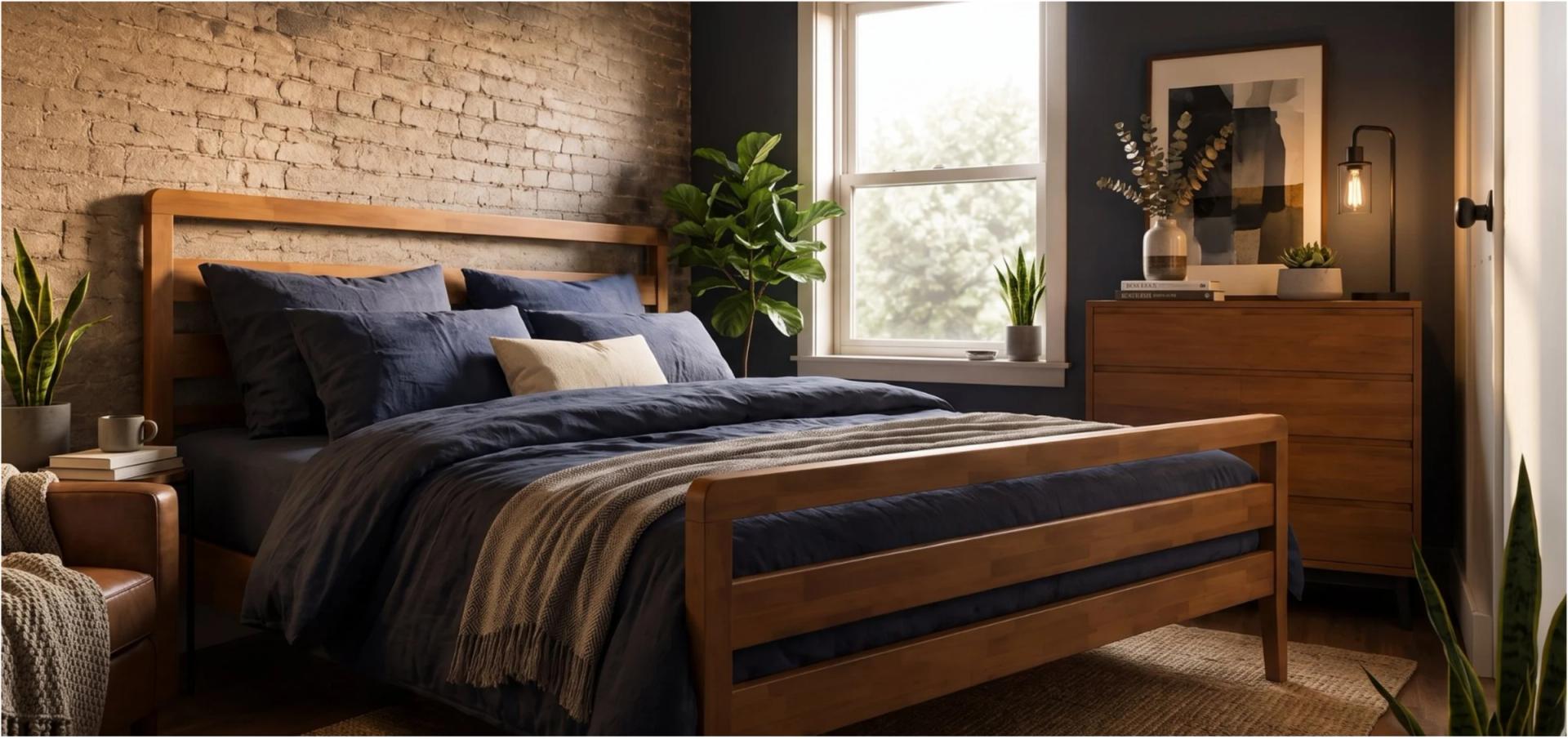
A render made after the decisions, not before them. Every piece in it passed a fit check against the plan it stands on.
Common questions
Can AI design a room I can actually buy?
Partly, and more than it could a year ago. REimagineHome, HomeDesigns AI and Decory AI all return links to real products in the image they generate. What none of them do is check those products against the room’s measurements, because the pipeline works from a photograph and a photograph has no dimensions in it (Checked August 2026).
What is the difference between AI interior design and virtual staging?
The buyer. Staging tools furnish an empty room to sell a property, so the furniture only has to look plausible in one photograph. Design tools restyle a room somebody intends to live in, which is a higher bar, and a few of them now carry that through to a shopping list.
Do AI renders get the size of furniture right?
They get it visually plausible, which is not the same thing. The model is composing an image, not solving a layout: nothing in it knows the wall is 3.2 m or that the door swings into the corner you just filled. If the piece has to fit, the check has to happen against a plan, not against a picture.
Is there a free AI interior design tool?
Decory AI is free on iOS and Android and redesigns a photographed room in about thirty seconds. Most of the rest run a free trial and then meter you in credits or images. If free is the requirement, start there rather than with a trial you will run out of (Checked August 2026).
Which one should I use?
It depends entirely on what you have to hand over. If it is images to decide a direction, use a restyling tool. They are fast and cheap and several are excellent. If it is a property listing, use a staging tool built for it. If it is a room somebody has to order and install, the picture is the least of the work and you want the plan to be the source of truth.
Where does Decato fit?
At the third of those, and it is not the answer to the first two. It reads a floor plan, matches real in-stock furniture to it, refuses anything that does not clear the walkways and door swings, and hands back a priced list with a render built from those exact products. It is a Mac app today, and planning runs free on your own ChatGPT, Claude or Gemini key.