
Decato vs IKEA Kreativ when the room is not all from one shop
IKEA Kreativ is a genuinely good free tool. It scans your room with a phone, builds a lifelike replica with real dimensions, lets you erase the furniture that is there, and fills the space with IKEA products you can then order. Every one of those products is from IKEA — which is the whole question this page turns on.
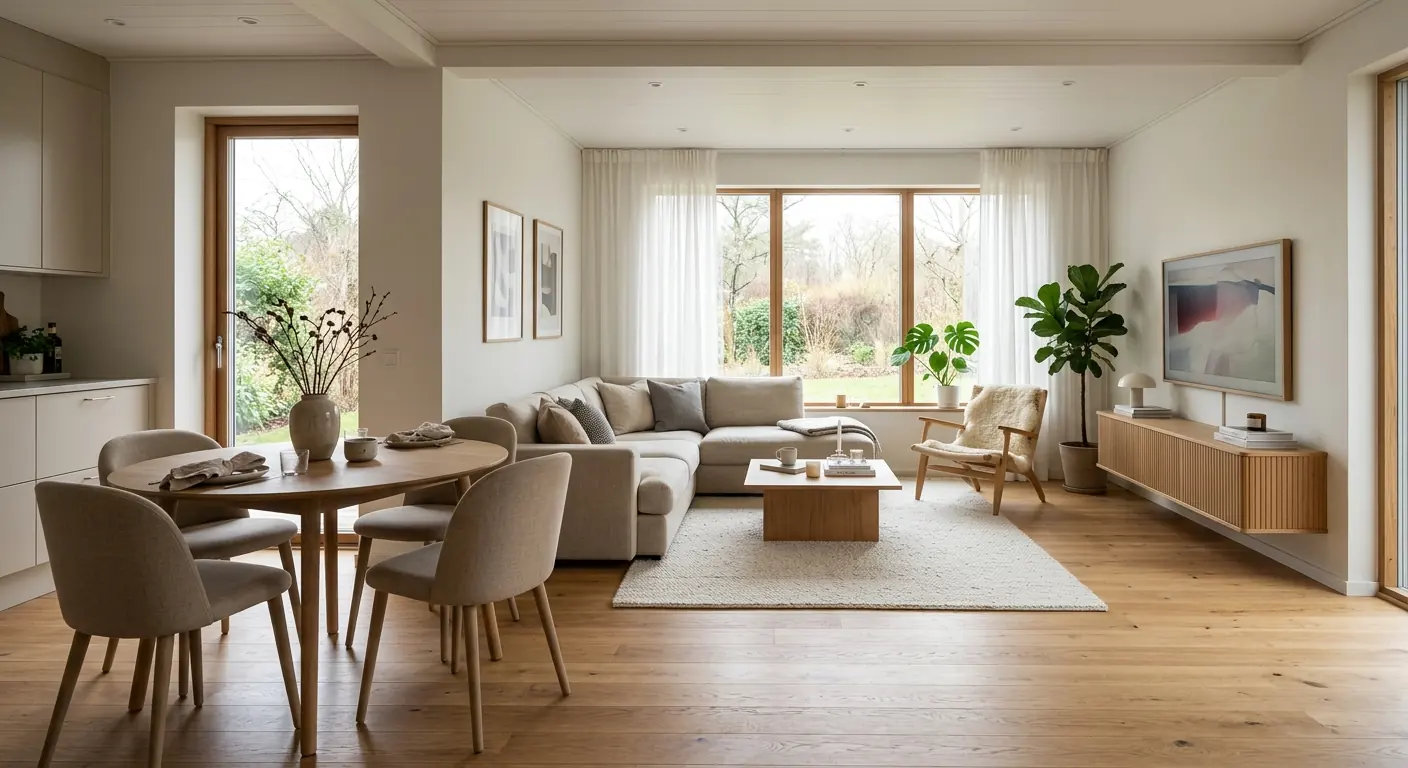
Decato
Every piece here was measured against the plan before it was allowed into the room.
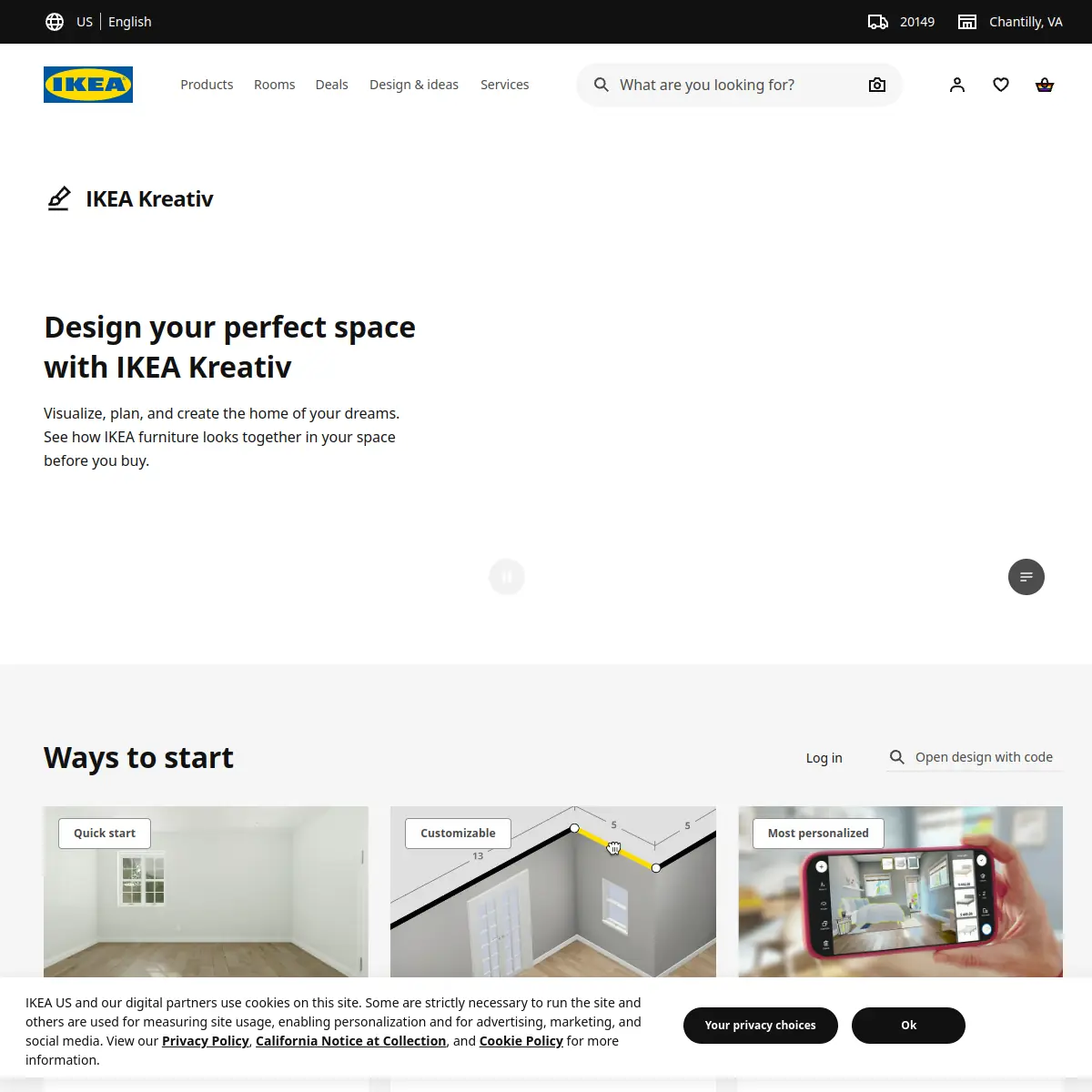
A free design tool inside the IKEA app and website. It scans a real room into an editable replica with accurate dimensions, lets you erase the furniture already there, offers fifty-plus prebuilt showroom rooms to work from, and finishes with the IKEA products placed in your cart.
A tool for rooms someone is billed for. It works from a floor plan, matches in-stock products — IKEA and Wayfair today, with further retailers planned — to the space and the budget, refuses anything that will not physically fit, and returns a priced spec a client can approve line by line.
If the room is being furnished from IKEA, use Kreativ — it is free, it captures the space well and it ends in an order. The moment the answer involves two retailers, a budget you must hold to, or a client who needs a document, a single-catalogue tool cannot get you there.
What each one does
Free to use
Decato plans free; sourcing is paid
Scans a real room with a phone
Erases the furniture already there
Sources beyond a single catalogue
IKEA and Wayfair today, more planned
Refuses a piece that will not fit
Priced spec for a client to approve
Holds a whole-room budget
A cart totals what is in it
Ends in a real order
Prebuilt showroom rooms to start from
Works on a phone
Neither tool wins everywhere
IKEA Kreativ does things Decato cannot do at all. Knowing exactly where the line falls is more useful than being told one tool is better.
- Not limited to one shop: Wayfair sits alongside IKEA today, with more retailers planned
- Refuses furniture that will not clear a wall or a door swing before you see it
- Produces a specification for a client to approve, not a basket for you to check out
- Holds a whole-room budget while the room is still being decided
- Free, permanently, with nothing to subscribe to
- The room scan is excellent, and captures dimensions Decato asks you to supply
- Erases the furniture already in the room, which Decato cannot do at all
- Fifty-plus prebuilt showroom rooms to design against without scanning anything
- Ends in a real order from a retailer you already trust
If you move across
Nothing here argues for leaving Kreativ if you buy from IKEA. It matters when the room stops being answerable from one catalogue.
- The room dimensions Kreativ captured, retyped or drawn into a Decato plan
- The IKEA pieces you liked — Decato will price them against alternatives from other shops
- The style direction the scan-and-place work settled on
- Saved Kreativ rooms or carts, which stay inside your IKEA account
- The scan itself. Decato reads a plan rather than a captured 3D replica
- The price: Kreativ costs nothing, and Decato charges once you source
Compare Decato against the next closest workflow.
If this page is close but not exact, use the routes below to compare Decato against staging-first, retail-first and render-first alternatives with the same decision lens.
Decato vs REimagineHome
Both source real furniture. REimagineHome fits it to a photo; Decato fits it to a dimensioned plan.
Staging-firstDecato vs Virtual Staging AI
Staging sells the photo. Decato specifies the room — real products, measured fit, a priced spec.
Service-outputDecato vs BoxBrownie
BoxBrownie sells edited images per job. Decato sources a room into a priced specification.
Retail-workflowDecato vs Wayfair
Wayfair plans your room and fills its own cart. Decato checks the fit and hands over a spec.
Most comparison tools judge the screenshot. Designers still have to deliver the room.
Decato is optimized for the step after concept approval: matching real products, checking fit, keeping the room inside budget and turning the output into a defendable package instead of a render to reverse-engineer.
Common questions
Is Decato better than IKEA Kreativ?
Not for furnishing a room from IKEA. Kreativ is free, its room scan captures dimensions Decato asks you to draw, and it ends in an order. Decato is the better tool only when the room needs pieces from several retailers, or a client needs a priced specification rather than a basket.
Can IKEA Kreativ use non-IKEA furniture?
No — it furnishes from the IKEA catalogue (Checked August 2026), which is the point of it being free. Decato reaches past that: IKEA and Wayfair are live today, with further retailers planned, so a room can already mix the two where that gives the better answer.
Does Kreativ check whether furniture fits?
Its scan captures the room with real dimensions, which is genuinely useful, but no fit refusal is advertised — where a piece goes is your decision. Decato refuses a piece outright when it crosses a wall, blocks a door swing or breaks a clearance.
Which is better for client work?
Decato, because of what each hands over. Kreativ ends in a cart and a room saved to your IKEA account. Client work ends in a document: a priced spec, tied to a layout, that someone can approve and someone else can order from.
Can I use both?
Often the sensible thing, particularly on a budget-led project. Use Kreativ to scan and test the IKEA half, then bring the dimensions and the shortlist into Decato, which will price those pieces against alternatives from other retailers and check each against the plan.