
Decato vs Decory AI when the list has to hold up
Decory AI is a free phone app that redesigns a room from a photo in about thirty seconds, and it goes further than most: shoppable links to the exact pieces, plus a downloadable report with colour codes and a furniture list. Decato asks for a floor plan instead, and the list it returns has been measured against your walls.

Decato
The list behind this room was checked against wall lengths before anyone saw the picture.
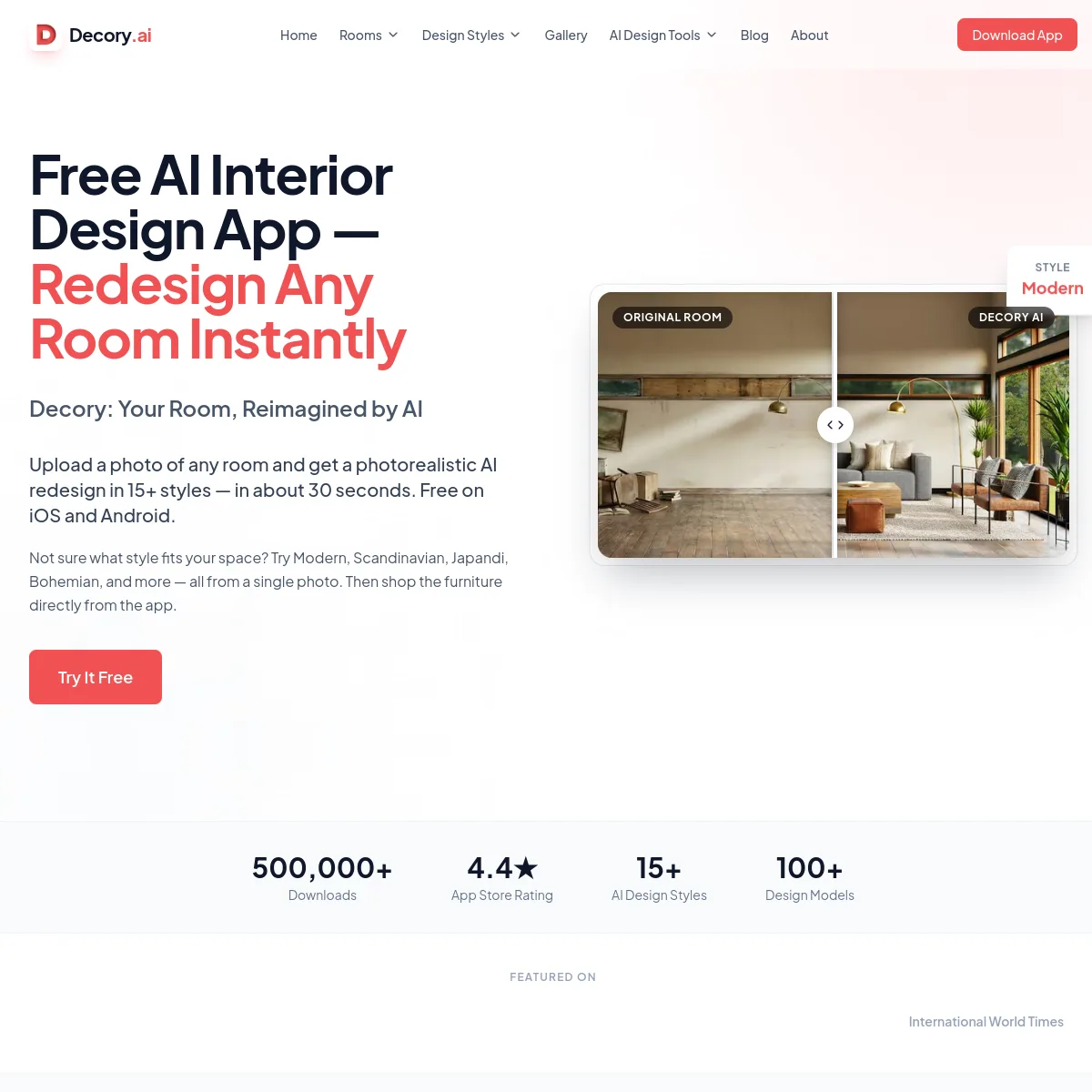
A free iOS and Android app that redesigns a photographed room in around thirty seconds across fifteen or more styles, with object replacement, flooring and wall colour tools, shoppable links to the pieces shown, and a downloadable report carrying colour codes and a furniture list.
A desktop tool for work that gets invoiced. It requires a dimensioned plan, matches in-stock products against the real walls and clearances, refuses what does not fit, and prices the result into a spec a client can approve line by line.
If the room is yours, or you want a fast answer to what a space could look like and what to buy for it, Decory is free, quick and genuinely shoppable. If a client is paying and the sofa arriving too deep is your problem, a photo-based list cannot tell you that in advance.
What each one does
Starts from a measured plan
Starts from a phone photo
Links furniture you can buy
Measures the piece against your walls
Hands back a document to keep
A priced spec against a design report
Tracks what the room costs
Free to use
Decato plans free; sourcing is paid
Works on a phone
Colour codes for finishes
Editable project you revise later
Neither tool wins everywhere
Decory AI does things Decato cannot do at all. Knowing exactly where the line falls is more useful than being told one tool is better.
- The furniture list is measured — every piece was tested against the room before it appeared
- Prices are tracked as the room fills, so the list arrives with a total attached
- Products carry stock status, so the list is orderable rather than merely linked
- Built for a client relationship: the spec is what gets approved and what gets ordered
- Free on iOS and Android, where Decato asks for a subscription to source at all
- About thirty seconds from a phone photo, with no plan to draw first
- Genuinely shoppable links to the exact pieces shown
- A design report with colour codes, which Decato does not produce
- Runs in your pocket — Decato is a Mac app on a desk
If you move across
Decory is free and stays useful for quick answers. Moving matters when a room stops being yours and becomes something a client is invoiced for.
- The furniture list from a Decory report — Decato re-checks each piece against the plan
- The colour direction it settled on, as part of the brief Decato sources toward
- A budget for the room, which Decory does not track and Decato treats as a ceiling
- Redesign images or reports — Decato has no import path for either
- The photo itself. Decato works from a plan, not a picture of the room
- Any subscription: the two are billed separately, and Decory is free to start
Compare Decato against the next closest workflow.
If this page is close but not exact, use the routes below to compare Decato against staging-first, retail-first and render-first alternatives with the same decision lens.
Decato vs REimagineHome
Both source real furniture. REimagineHome fits it to a photo; Decato fits it to a dimensioned plan.
Staging-firstDecato vs Virtual Staging AI
Staging sells the photo. Decato specifies the room — real products, measured fit, a priced spec.
Service-outputDecato vs BoxBrownie
BoxBrownie sells edited images per job. Decato sources a room into a priced specification.
Retail-workflowDecato vs Wayfair
Wayfair plans your room and fills its own cart. Decato checks the fit and hands over a spec.
Most comparison tools judge the screenshot. Designers still have to deliver the room.
Decato is optimized for the step after concept approval: matching real products, checking fit, keeping the room inside budget and turning the output into a defendable package instead of a render to reverse-engineer.
Common questions
Does Decory AI let you buy the furniture?
Yes. Every redesign includes shoppable links to the exact pieces shown, and the app produces a report with colour codes and a furniture list (Checked August 2026). Comparisons that treat it as image-only are wrong. What it does not do is check any of those pieces against the room they are going into.
Then what does Decato add?
Measurement and money. Decato needs a dimensioned plan and uses it — a piece that crosses a wall or blocks a door swing is refused before you see it — and it tracks a running total as the room fills, so the list arrives priced rather than merely linked.
Is a design report the same as a spec?
Not for client work. A report tells you what the room looks like and what is in it. A spec ties each product to a place in the layout, with its dimensions, price and stock status, so it can be approved by a client and filled by a supplier without further interpretation.
Decory is free. Why pay for Decato?
You would not, for your own room. Decory is free on both app stores and answers in about thirty seconds. Decato is worth paying for when a mistake costs you — a delivered sofa that does not fit, or a budget agreed before anyone added up the pieces.
Can I start in Decory and finish in Decato?
That works well. Nothing imports automatically, but the furniture list and colour direction from a Decory report make a good brief, and Decato will re-check each piece against your plan and price the room around it.